The Carmoney to Strabane Strategic Trunk Main
Challenge
The Carmoney to Strabane Strategic Trunk Main represents the completion of nine years of planning and construction, backed by a £17 Million investment from Northern Ireland Water. This major infrastructure project delivers a new strategic water main connecting Carmoney Water Treatment Works (WTW) in Eglinton to Castletown Service Reservoir (SR) in the Strabane area. Identified as a priority in both NI Water’s 2012 Water Resource Plan (WRP) and the 2017 Water Resource & Strategic Resilience Plan (WR&SRP), the project enhances connectivity between the Northern and Western resource zones. By establishing this vital link, the scheme addresses key infrastructure gaps, strengthens supply resilience, and supports the continued delivery of high-quality drinking water to the region.
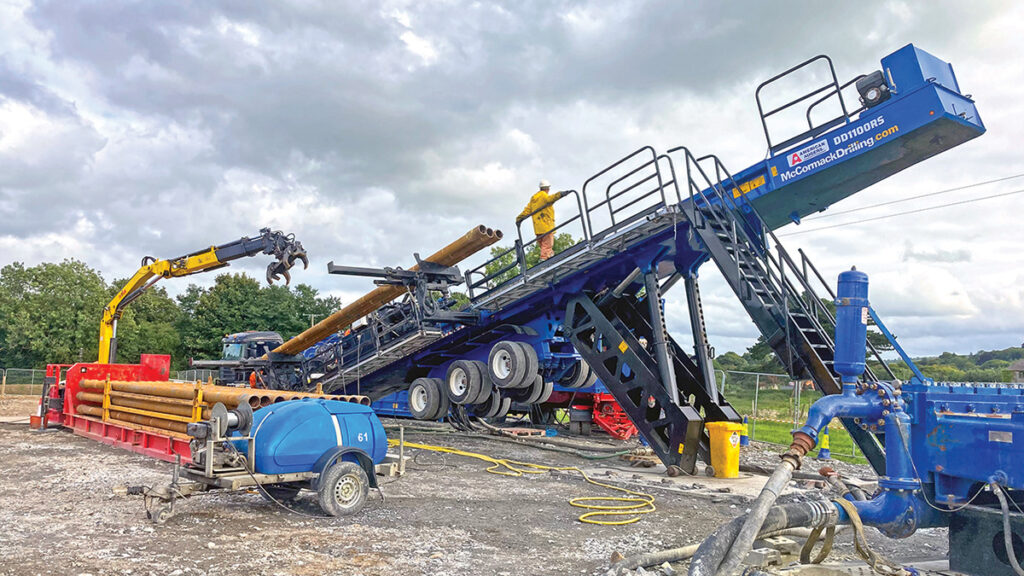
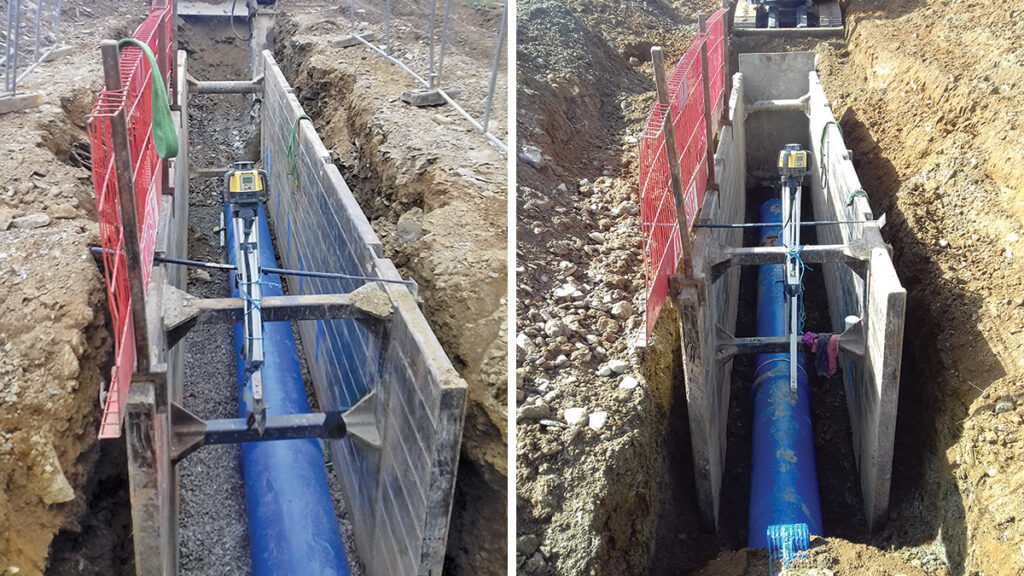
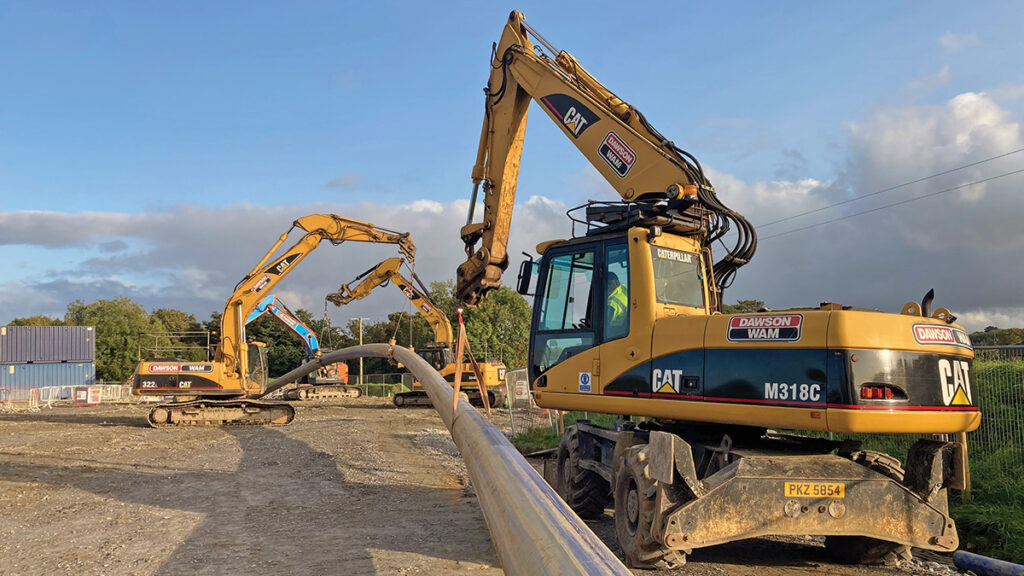
The scheme was divided into three distinct phases, the second of which comprised the installation of approximately 10km of 500mm diameter ductile iron trunk main from Edenreagh Road junction to Corrody SR mainly in agricultural land but included several road crossings, most notably the Main A6 carriageway. A key feature of this phase was a 400m horizontal directional drill beneath the River Faughan to install a 560mm diameter high performance polyethylene (HPPE) main. This watercourse of international significance due to its Atlantic Salmon population and designation as a special Area of Conservation. This phase reinforced the Caugh Hill – Corrody Trunk Main and supports the completed Northern Resilience Phase 3 project. It enables larger flow transfers to Corrody SR during outages at Carmoney WTW without negatively impacting high level customers in DMAs directly supplied from the trunk main. This enhancement further strengthens system resilience and security of supply in the Northern Resource Zone.
Solution
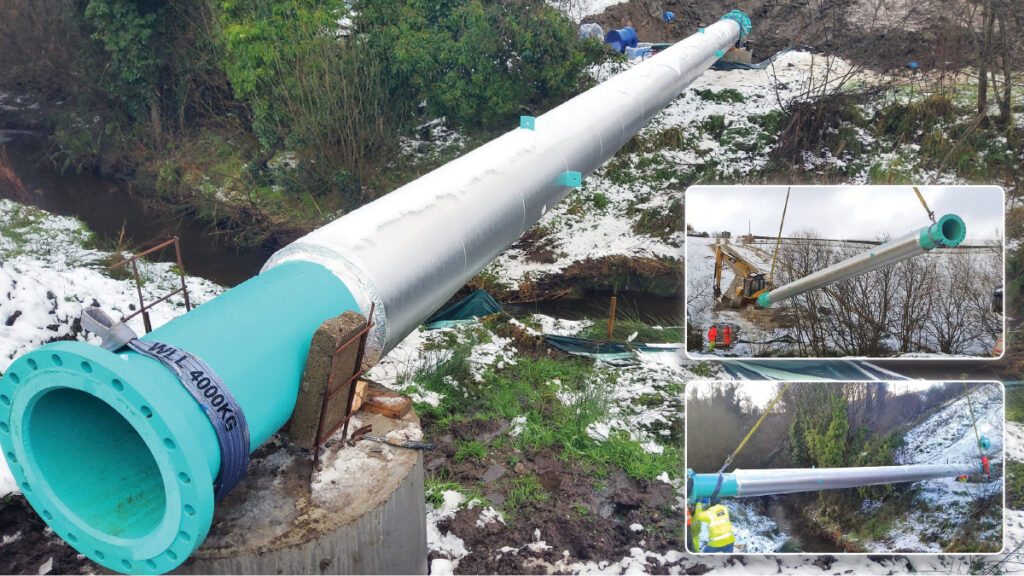
The scheme included two significant watercourse crossings, the previously mentioned horizontal directional drill beneath the River Faughan and the construction of a pipe bridge across the Burngibbagh River. For both crossings, maintaining ongoing communications with the Northern Ireland Environment Agency (NIEA) was essential. In line with NIEA requirements, sheet piles were installed at the drill entry and exit points to prevent any potential contamination of the river Faughan which is recognized for its ecological importance as a designated watercourse.
The project team also carefully considered the findings of the ecology survey and the Habitats Regulations Assessment to ensure full environmental compliance. Environmental challenges, including the presence of Japanese Knotweed, active badger setts and newts within the working area, were effectively mitigated without impacting the programme.
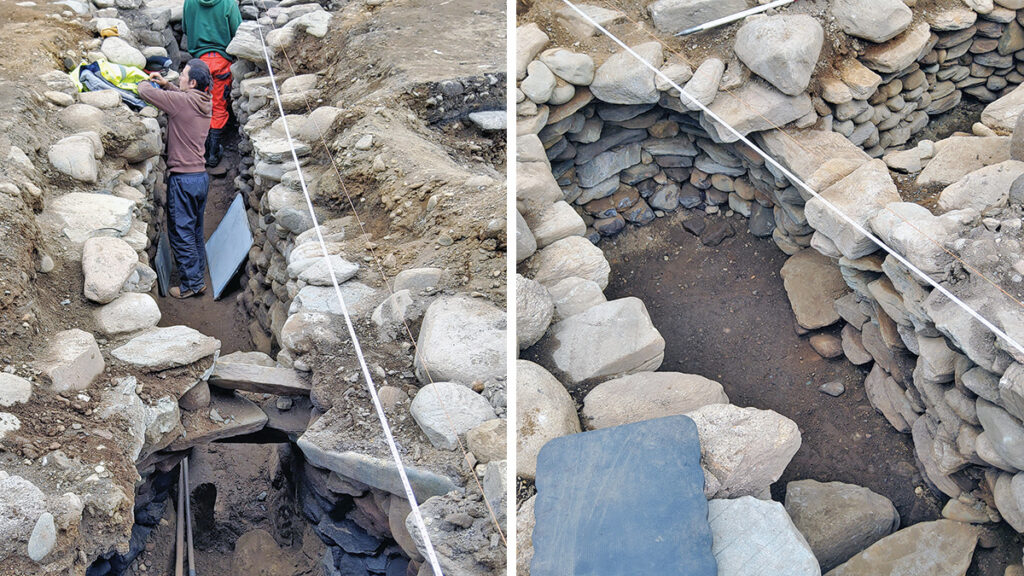
Throughout the course of the project there were numerous archaeological and historical discoveries. Ancient structures and artifacts were discovered, with the team collaborating closely with archaeologists and HED to carefully document and preserve these findings, ensuring the site’s historical significance was respected throughout the construction process.
The 10km pipeline was constructed whilst adopting several cost saving and environmentally responsible methods, namely maximizing the amount of reused excavated materials through a screening process. This minimized the amount of imported material and reduced the number of deliveries to site by significant amount. Additionally, where practicable, materials and aggregates were sourced from local suppliers near the site to reduce transportation distances and minimize the project’s carbon footprint.
Result
It was recognized early in the Early Contract Involvement (ECI) period that building strong relationships with landowners would be critical to the project’s success, with early engagement meetings held with the Ulster Farmers Union. As such, collaboration with local farmers and landowners remained a core focus throughout, ensuring minimal disruption to their land and promoting sustainable land use practices. To support this approach, a dedicated Lands Liaison Officer was appointed for the duration of the works. Their role was to build and maintain strong relationships with landowners and ensure transparent, ongoing communication with the local community – Keeping all stakeholders informed and engaged throughout and contributing to the successful delivery of the project.
The project was recognized by the Considerate Contractors Scheme for its health and safety initiatives, with the Murphy Dawson Wam JV receiving a Gold Award for the project, for the installation of single use defibrillators within all excavators across the project.
Client
Northern Ireland Water
Main Contractor
Dawson-WAM